
Report on the Lecture by Professor Brahim Dkhil (Université Paris-Saclay) at the Latvian Institute of Physics
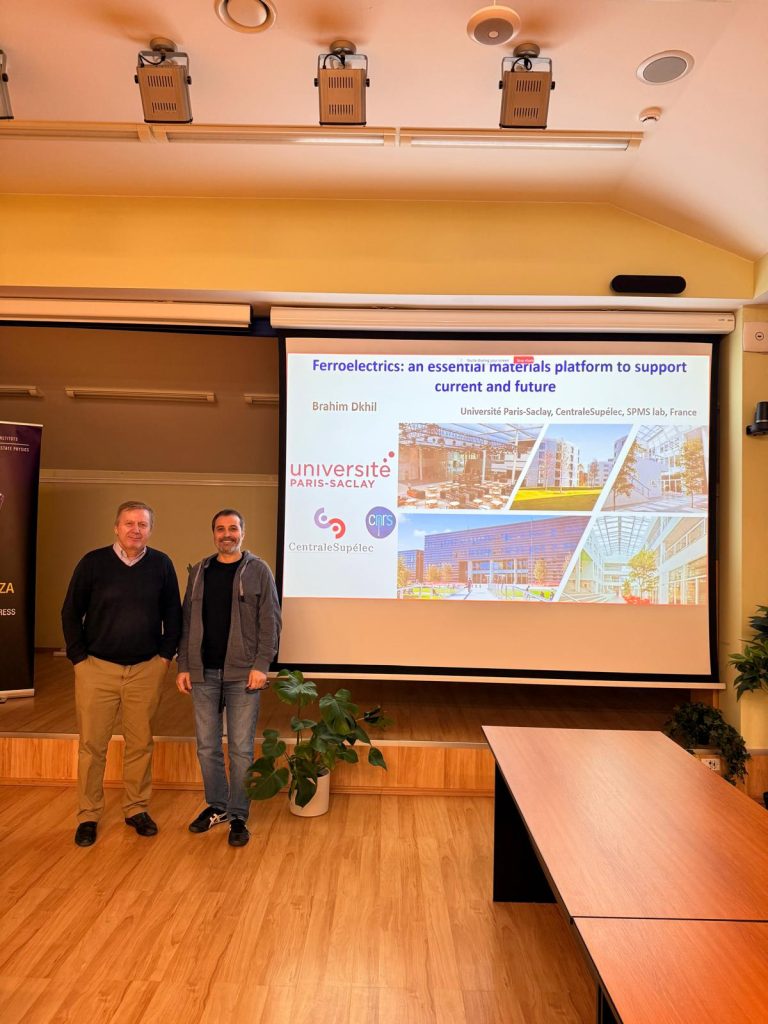
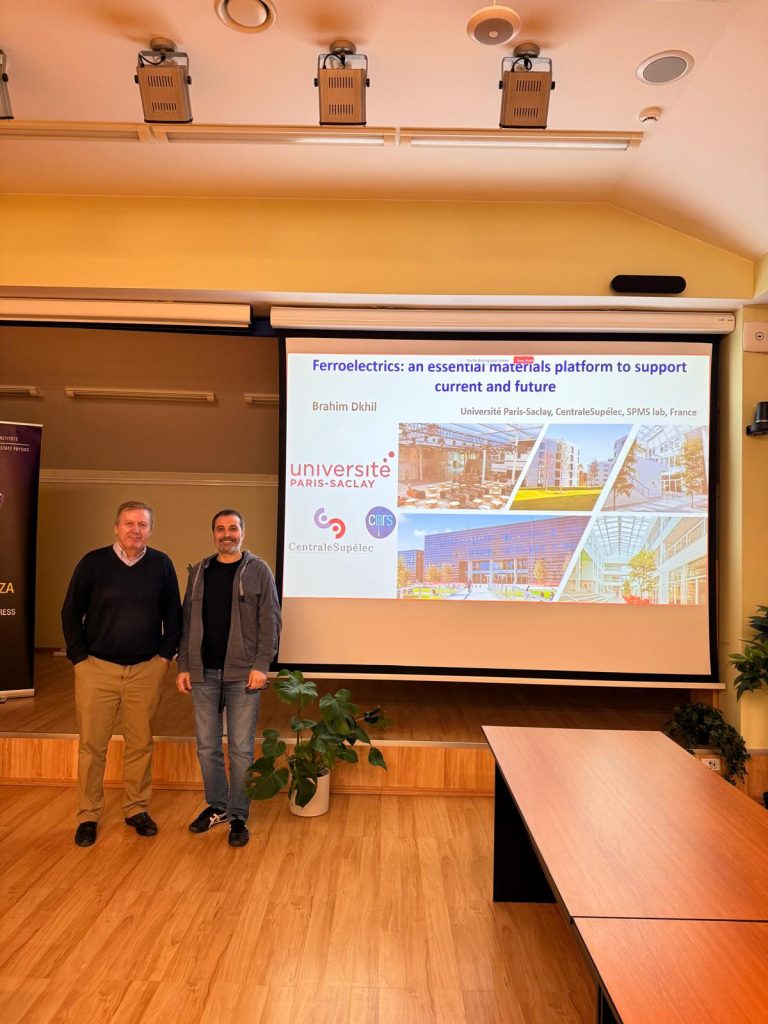
On December 9th, we hosted a highly anticipated lecture at the Latvian Institute of Physics titled “Ferroelectrics: an essential materials platform to support current and future advances,” delivered by the renowned expert, Professor Brahim Dkhil from Université Paris-Saclay, CentraleSupélec.
Ferroelectrics are materials offering rich physics crucial to many branches of condensed matter. Prof. Dkhil showcased how his group’s current work is harnessing the inherent functionalities of these materials for cutting-edge applications.
🧠 Driving Down Power in AI with Memcapacitors
Addressing the growing energy demands of Artificial Intelligence (AI), Prof. Dkhil focused on designing low-power artificial synapses. He presented a compelling case for moving beyond conventional memristors:
“I will show how the special class of relaxor ferroelectrics can be used to design memcapacitors rather than conventional memristors in order to further reduce the energy consumption required to operate computers based on neural networks.”
This research provides key insights into developing devices that effectively mimic brain function with vastly improved energy efficiency, a cornerstone of future high-performance, low-power computing.
🌍 Multicatalysis: A Holistic Approach to Environmental Challenges
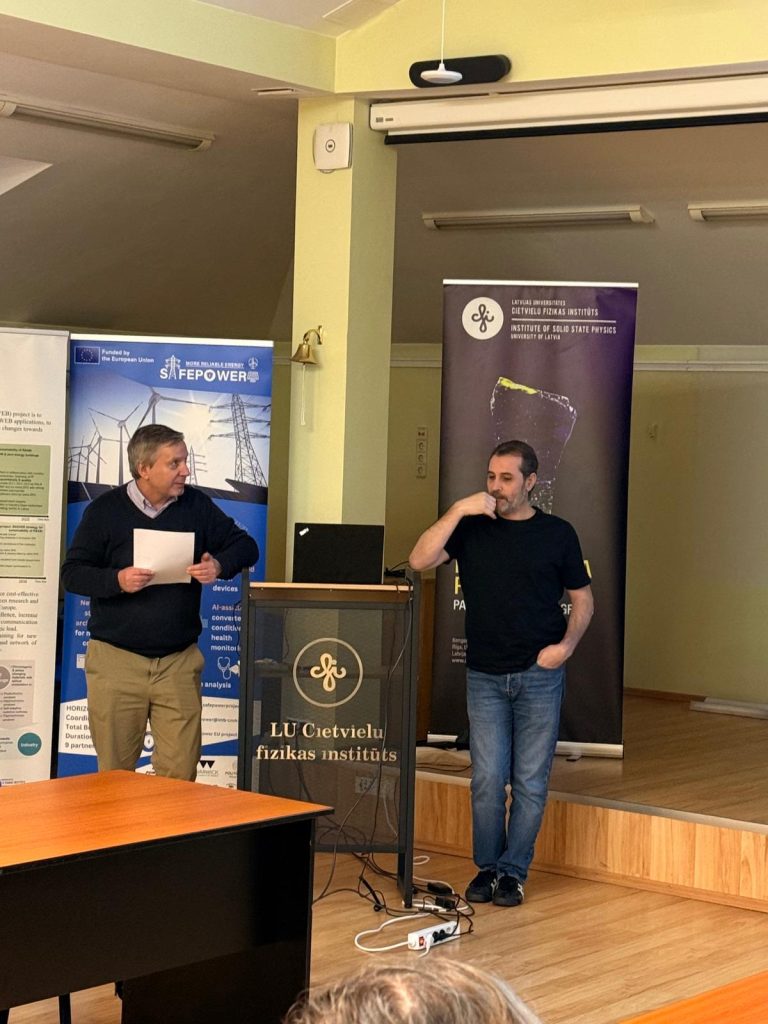
In the second part of his talk, Prof. Dkhil explored the application of ferroelectrics in multicatalysis. Because ferroelectrics are inherently multifunctional, their catalytic activity can be activated by light (photocatalysis), mechanical (piezocatalysis), and thermal (pyrocatalysis) stimuli simultaneously.
This ability to utilize multiple stimuli allows researchers to design highly efficient catalysts, offering a powerful tool for environmental and energy solutions, specifically in water purification and the sustainable production of fuels.
In Conclusion: Prof. Dkhil’s visit and lecture underscored the importance of international collaboration and the vital role of materials science research conducted at institutions like the Latvian Institute of Physics in driving global technological progress.
Leave a Reply